Op-Ed: Pacific Power Wants 57% More: Are We Paying for Wildfire Protection—or Future AI Data Centers?
From the Editor | Mount Shasta Observer
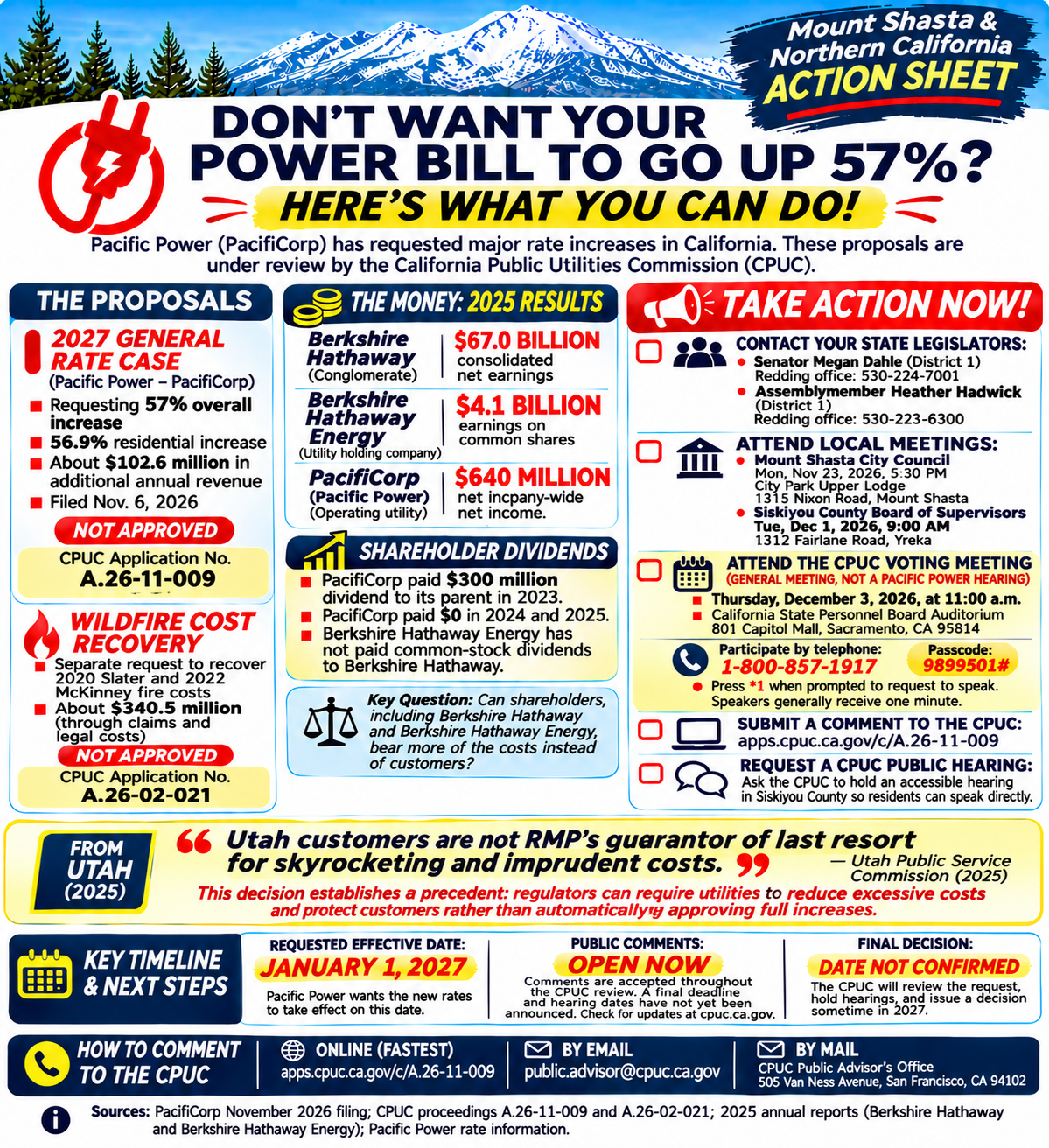
Pacific Power says it needs a 57% rate increase, largely to pay for wildfire protection. We certainly want—and are grateful for—wildfire prevention efforts, safe electrical infrastructure, and reliable power. Fair costs should be covered. But how much should customers reasonably pay, how much should shareholders absorb, and could we also be paying for the enormous electricity demands of future AI data centers?
These are questions worth asking, especially here in Siskiyou County, where a proposed AI data center at the former Crystal Geyser bottling plant near Mount Shasta has already raised serious concerns.
Are We Being Asked to Pay for Future AI Data Centers?
Large AI data centers consume tremendous amounts of electricity. Depending on their size and location, they can require expensive new substations, transmission lines, transformers, and additional power supplies.
Who pays for all that? The corporations building these facilities, or the rest of us through higher electric bills?
This isn't just a hypothetical concern. Regulators across the country are examining how to prevent the costs of serving large data centers from being shifted onto residential customers and small businesses.
Interestingly, Oregon regulators have already taken action to protect Pacific Power customers from subsidizing AI data centers.
On November 13, 2026, the Oregon Public Utility Commission approved new rules requiring qualifying large data centers to pay the costs of the electricity infrastructure and services needed for their operations. The rules apply to new data centers with electrical demand of at least 20 megawatts, require long-term service agreements, and take effect January 1, 2027.
And here's what's especially interesting: Pacific Power itself publicly supported these protections!
In its November 13 announcement, Pacific Power stated that the new approach would ensure large energy users pay their own way while protecting affordability for existing customers.
Read the company's announcement: Pacific Power Will Require New Large Data Centers to Pay Their Way.
The Oregon Public Utility Commission's official announcement also explains how the new framework is intended to prevent these expenses from being shifted onto residential and commercial customers.
California regulators are also examining this issue.
So what protections do we have here in California? If Pacific Power agrees that data centers should pay their own way in Oregon, shouldn't California customers receive comparable protections?
And here's the bigger question: Could Pacific Power's proposed 57% increase already include infrastructure investments or financial forecasts anticipating future industrial electricity demand?
Pacific Power attributes its requested increase largely to wildfire protection, insurance, and operating expenses. We don't yet have evidence that the proposed Mount Shasta-area data center is included in those costs. But we also need to see the detailed numbers before we can rule out broader costs associated with anticipated industrial growth.
If a data center were developed near Mount Shasta, what electrical infrastructure would Pacific Power need to provide? How much would it cost? And what guarantees would protect existing customers from paying for facilities built primarily to serve a private corporation?
Are we being asked to subsidize future AI data centers without being clearly told?
That's a question Pacific Power and California regulators should answer publicly.
The Anchoring Game: When 20% Starts Looking Like a Bargain
There's an interesting bargaining technique called “anchoring,” where someone starts with an unusually high number, making a lower number seem reasonable by comparison.
For example, if Pacific Power asks for 57% and regulators approve 20%, we might celebrate that as a victory. But is 20% actually justified, or does it just look good compared to 57%?
For a household already paying $250 a month, a 20% increase would mean another $600 a year!
That's a significant burden, even if it's much less than the original request.
We don't know whether Pacific Power is deliberately using this strategy, but it's worth considering. A smaller increase isn't necessarily a fair increase.
Wildfire Protection or Disaster Profiteering?
I'm also wary of disaster profiteering—when companies take advantage of disasters to increase profits or shift excessive costs onto the public.
Wildfire protection is essential. We all benefit from safer electrical infrastructure, and we should pay our fair share of legitimate costs.
But how much of the expense should fall on customers, and how much should be absorbed by corporate shareholders?
Utilities are entitled to recover reasonable, regulator-approved costs and earn an authorized return on certain investments. That doesn't mean every proposed expense—or every requested rate increase—is automatically justified.
We should be able to examine whether wildfire-related spending is necessary, cost-effective, and fairly allocated.
And we should be especially careful that legitimate wildfire concerns don't overshadow other expenses that may be included in the same rate request.
Wildfire protection should not become a blank check.
Show Us the Numbers, Pacific Power!
I think we deserve to see the actual numbers.
What does wildfire prevention really cost? Which expenses are necessary and reasonable? How much profit is the company allowed to make, and how much financial responsibility should its owners bear?
And now we have additional questions:
- Does the proposed 57% increase include any investments or forecasts related to future data centers or other large industrial electricity users?
- What would it cost to provide electricity to a major AI data center near Mount Shasta?
- Would the developer be required to pay for the necessary infrastructure, or could those costs be spread across existing customers?
- What protections would prevent residents from being stuck with the bill if a data center project were abandoned after expensive infrastructure had already been built?
- If Oregon has established special protections for PacifiCorp customers, why shouldn't California customers have comparable safeguards?
These questions deserve specific answers, supported by financial records—not just general assurances. We shouldn't have to choose between safe electrical infrastructure and affordable electricity. We deserve both.
Responsible consumers want to pay our fair share, while making sure we're not being asked to pay more than we should—or subsidize expenses that rightfully belong to large corporations.
The Power of Community
One of the things I've come to appreciate about living in Mount Shasta is how much people care about this place and one another. We don't agree on everything, but when something threatens the well-being of our neighbors, people find ways to come together.
That's what we're seeing now, as residents share information and elected officials ask questions about an increase that could affect thousands of households.
The experiences in Utah and Oregon give us good reason to be hopeful, and we can learn from studying what happened there. They show us how community power goes far beyond waiting for the California Public Utilities Commission (CPUC) to make a decision.
Together, we can demand transparency, challenge unfair costs, and help shape the future of how our electricity is priced.
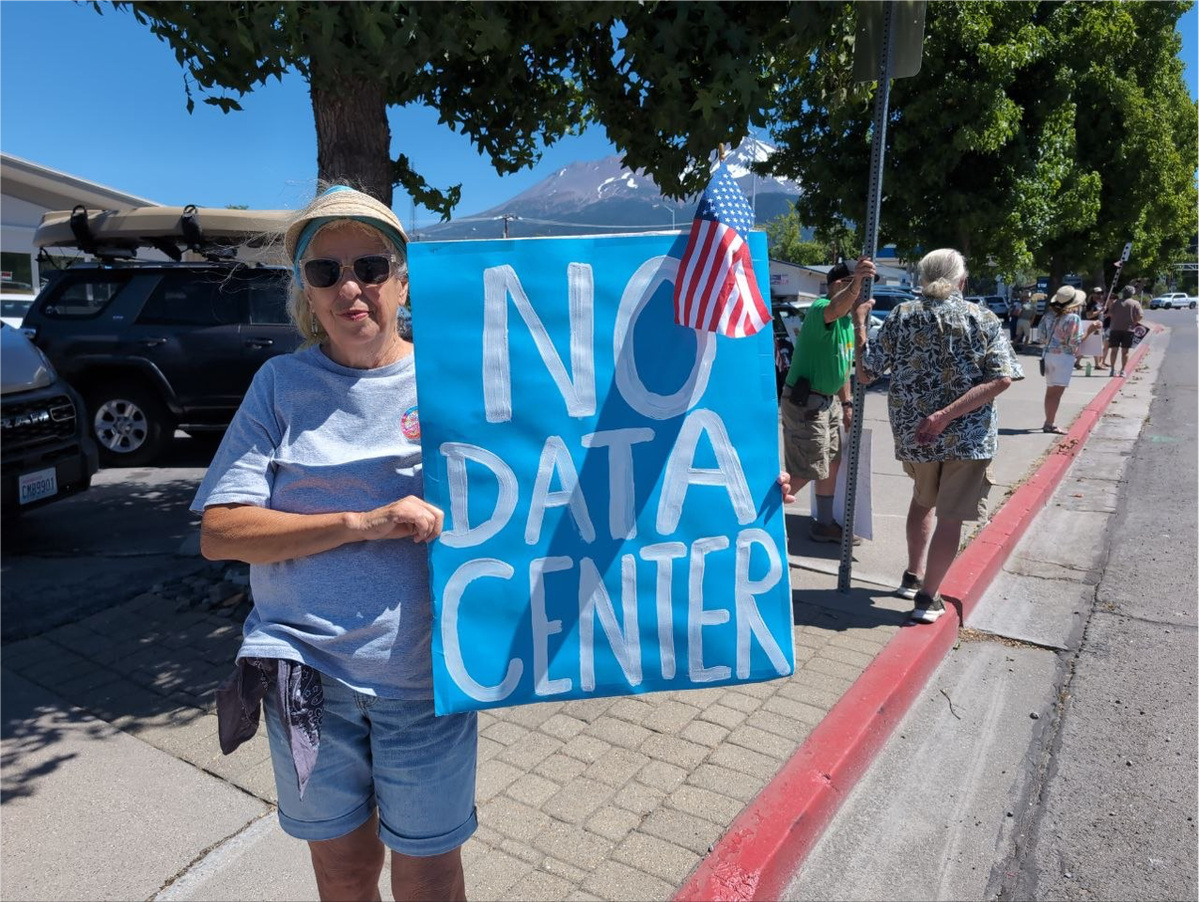
We've already seen Mount Shastans' power in action through the recent demonstrations and organizing around the proposed AI data center development.
We are not just customers waiting for decisions to be made for us. We are a community with the power to organize, influence policy, and create lasting change.
After all, the greatest power doesn't flow through transmission lines, and the most powerful fires aren't wildfires. Many who live here speak of a special energy flowing through Mount Shasta itself—rising from deep within the earth, reaching toward the heavens, and activating something within us. Like the mountain, our community draws strength from deep roots, rises to meet challenges, and stands tall to do what's right when it matters most.
🌺 Mahalo to everyone who is speaking up, asking questions, and keeping that community fire burning!
See this article for how to make your voice heard:
 Anastasia Sprout
Comments ()