When the Fire Engine Arrives, Who Will Be There to Fight the Fire?
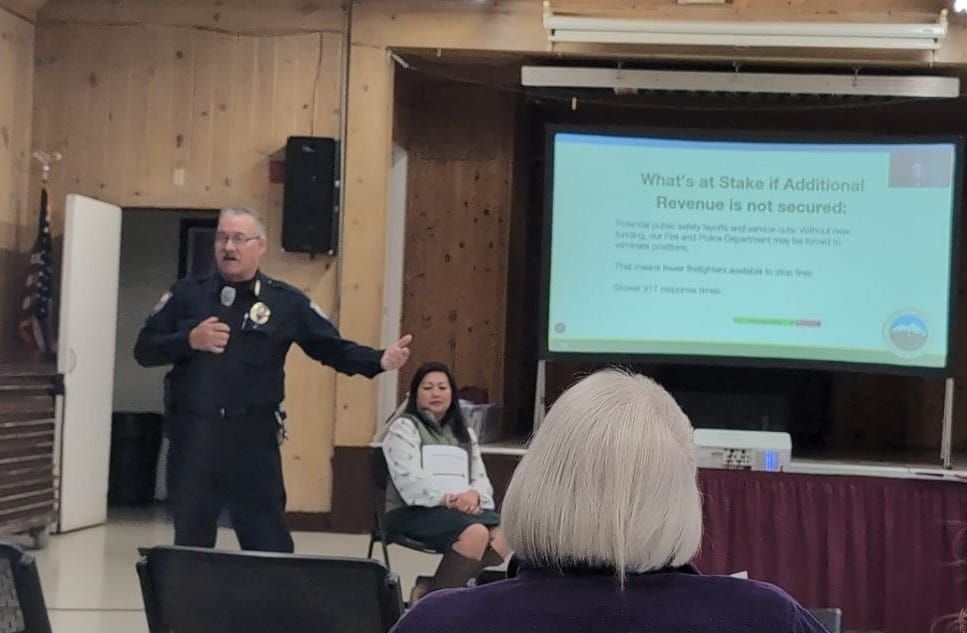
Mount Shasta Police Chief Robert Gibson explains what's at stake if Measure H fails, from emergency response and police staffing to the unexpected costs of keeping a small mountain town safe.
By Anastasia Sprout | Mount Shasta Observer | October 14, 2026
Imagine calling 911 because your house is on fire. You hear the sirens, look outside, and see the fire engine pulling up. Relief washes over you. Help has arrived.
Except there aren't enough firefighters on the engine to fight the fire.
Mount Shasta Police Chief Robert Gibson described just such an emergency during an October 13 town hall meeting about Measure H, the proposed one-percent sales tax increase on the November 3 ballot. When the fire engine arrived, it had an engineer but no volunteer firefighters immediately available to help. Gibson and a city code enforcement officer stepped in to assist while waiting for volunteers to reach the scene.
It wasn't that the volunteers didn't care. They simply weren't there. Some work in Weed or elsewhere in Siskiyou County, and when an emergency occurs during the workday, they may have to leave their jobs and travel back to Mount Shasta before they can respond.
A fire, unfortunately, doesn't wait for anyone to get off work.
Gibson contrasted that experience with another fire behind a local radio station, where a fully staffed response helped bring the situation under control before it could become something much worse. In a mountain community surrounded by forest, with hot, dry summers and the ever-present possibility of strong winds, the difference between a few minutes and several more can be enormous. Or catastrophic.
That was one of several real-life examples Gibson offered to explain why he believes Mount Shasta needs additional revenue to maintain its emergency services. Fire Chief Cory Burns also gave compelling testimony at the meeting, making his own appeal for support of Measure H.
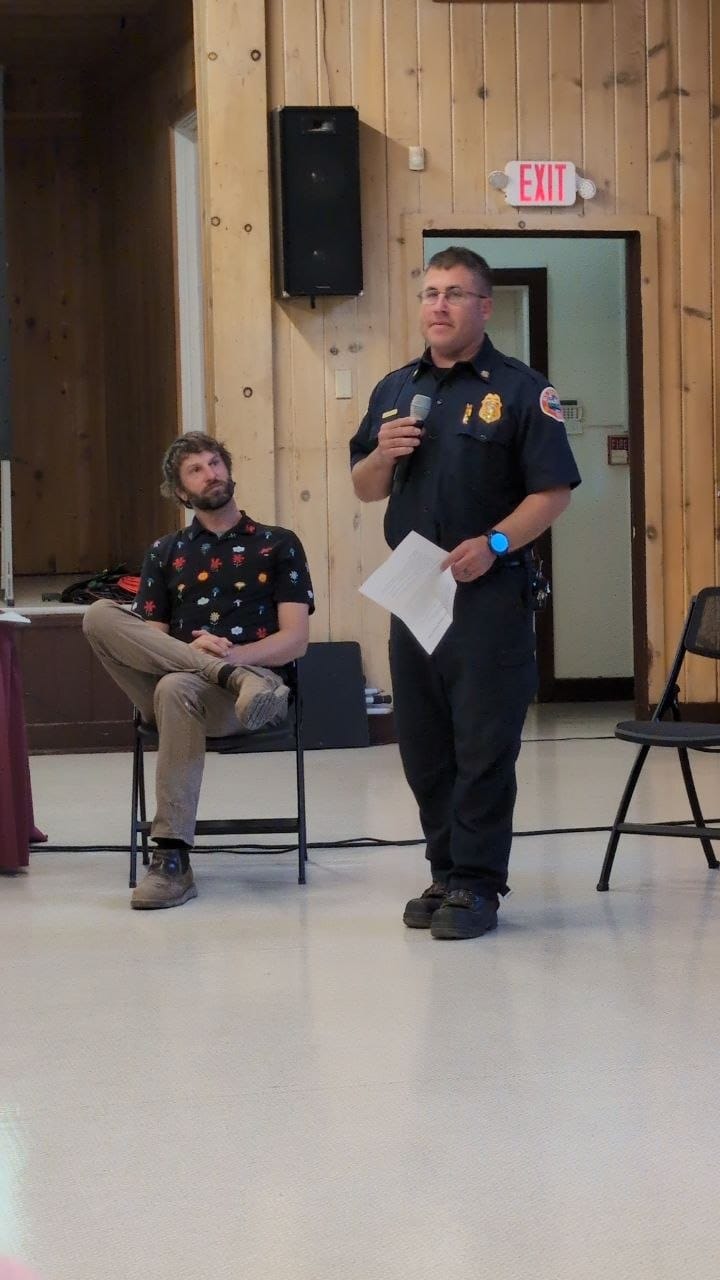
Gibson's presentation was less about abstract financial projections than about the practical difficulties of running a small-town emergency services operation. Police officers, firefighters and dispatchers must be available when people need them, whether the city has money to spare or not. And when something unexpected happens, somebody has to respond.
What Exactly Is Measure H?
Measure H proposes increasing Mount Shasta's local sales tax by one percentage point, adding one cent to every dollar of taxable purchases made within the city. A $100 taxable purchase would cost an additional dollar. Visitors shopping in Mount Shasta would pay the tax alongside residents, while most groceries and prescription medications would remain exempt under California law.
City officials have presented the measure as a way to preserve police and fire protection, emergency dispatch, wildfire preparedness and other essential municipal services. There is, however, an important distinction between what officials say they intend to support and what the measure legally requires.
Measure H is a general tax, not a dedicated public safety tax. Its revenue would go into the city's general operating funds and could be used for other municipal purposes. Although the measure provides for annual audits and citizen oversight, it does not legally guarantee that every additional dollar would be spent on police and fire protection.
For residents, this distinction is important. Gibson is explaining what he believes the city risks losing without additional revenue. Measure H would provide the city with more general operating funds, but decisions about how that money is allocated would ultimately rest with the Mount Shasta City Council. While the City Manager and Finance Department prepare and administer the budget, the Council is responsible for approving it and determining the city's spending priorities.
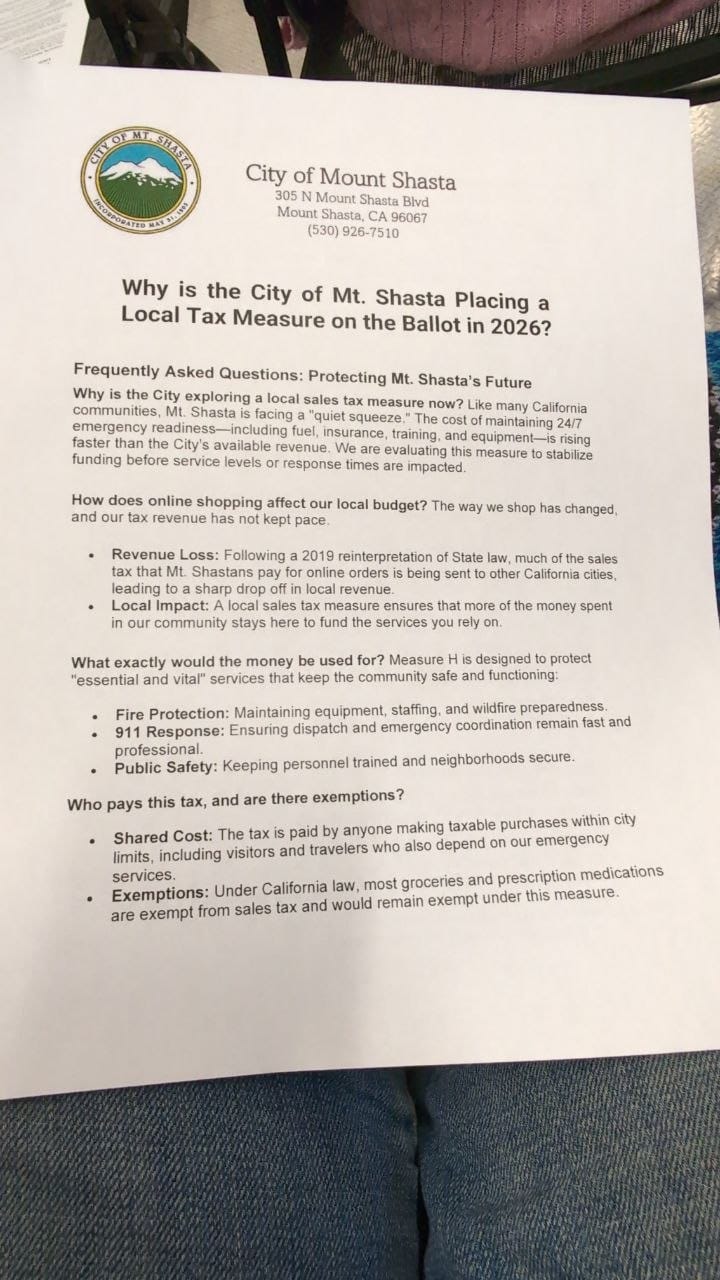
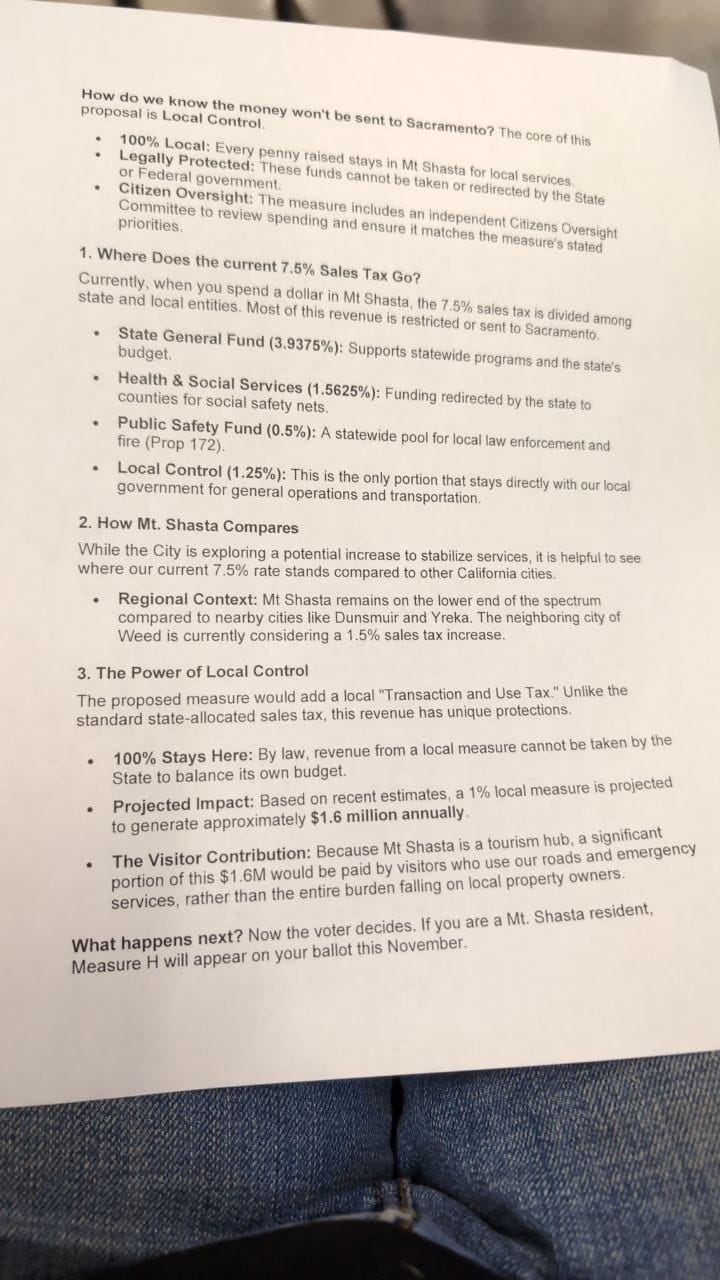
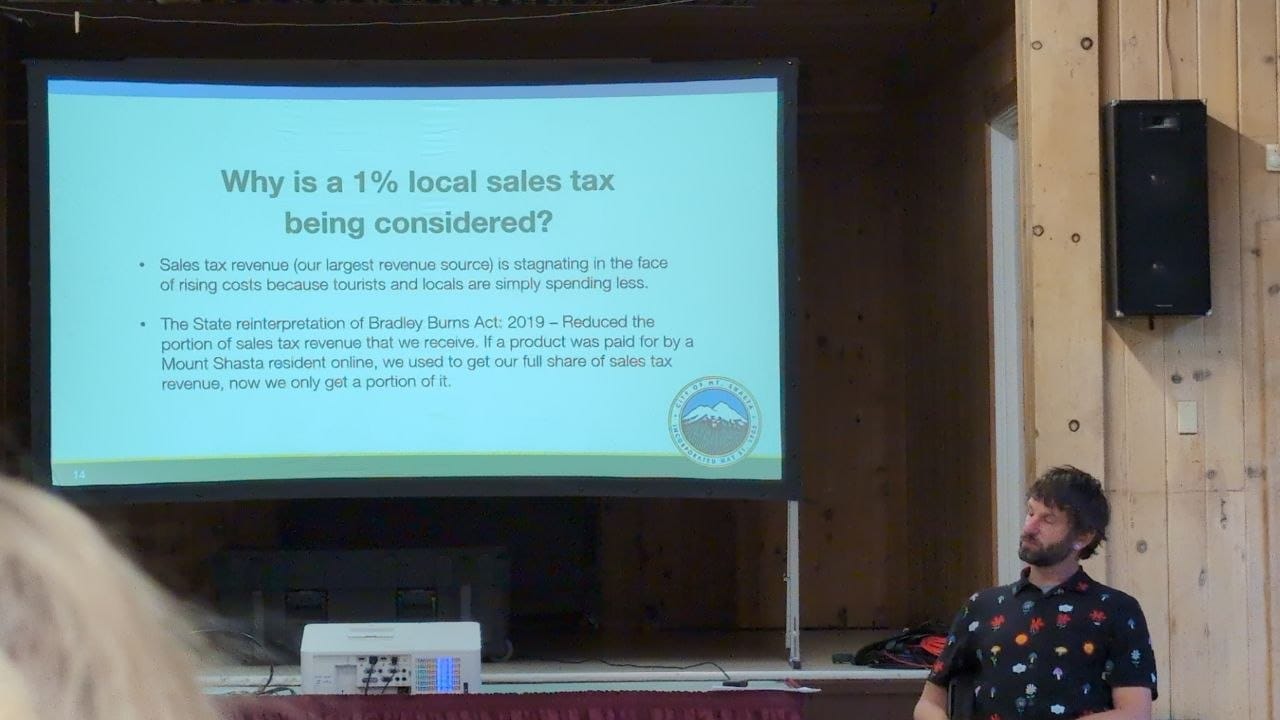
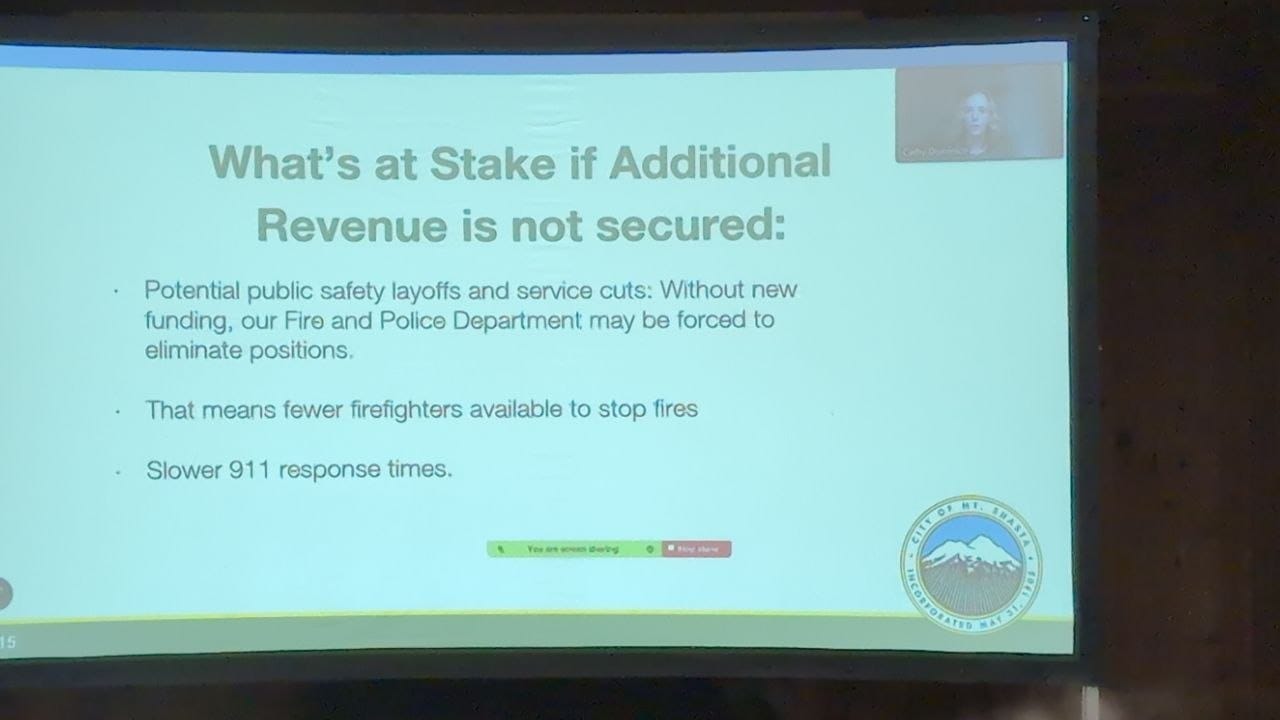
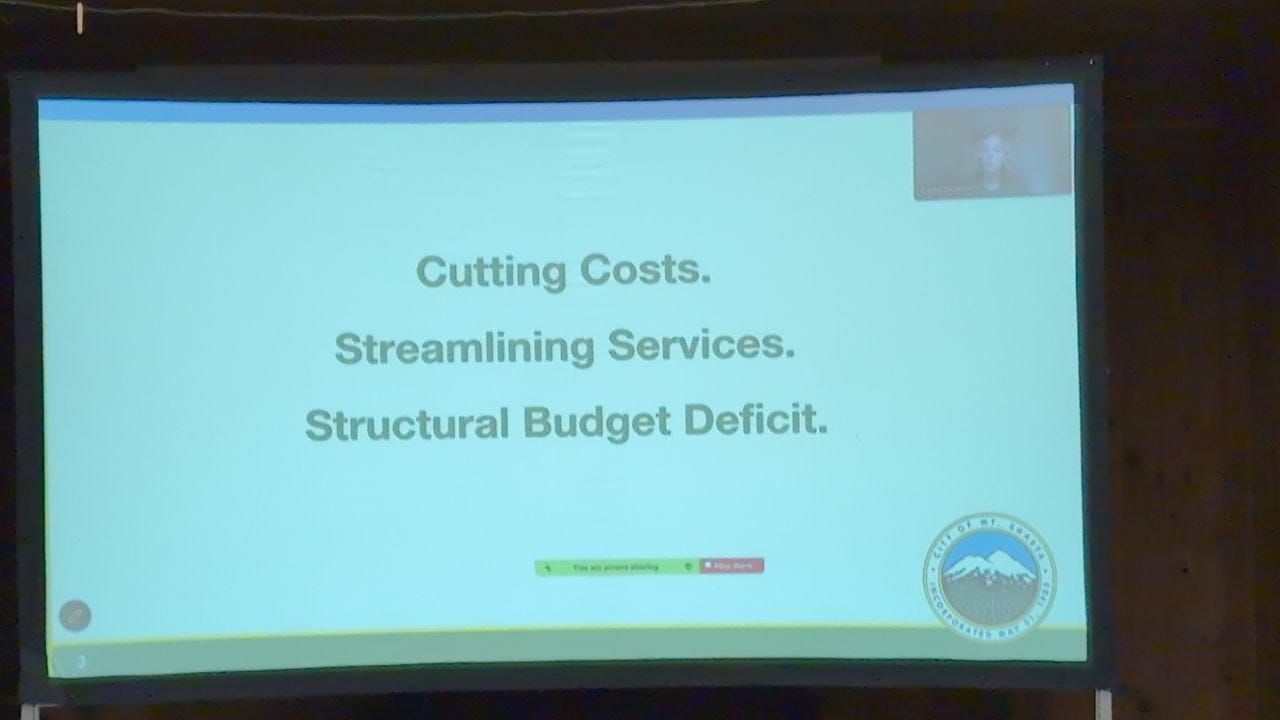
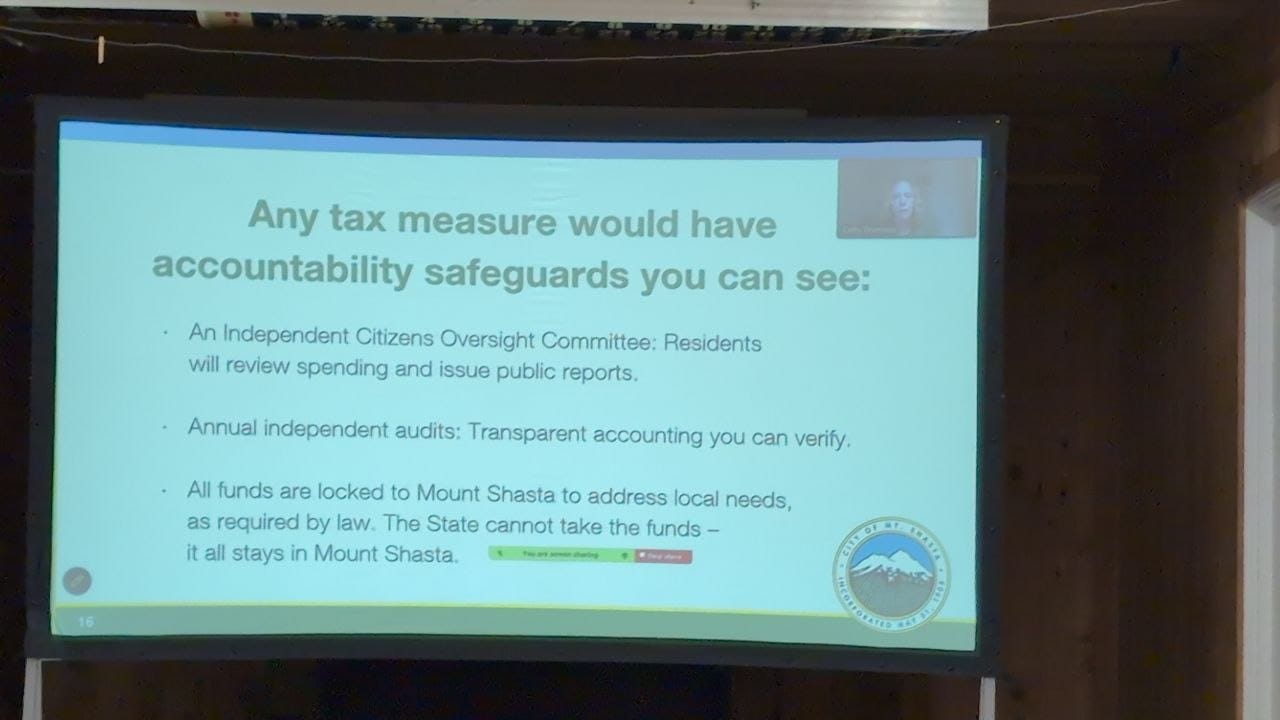
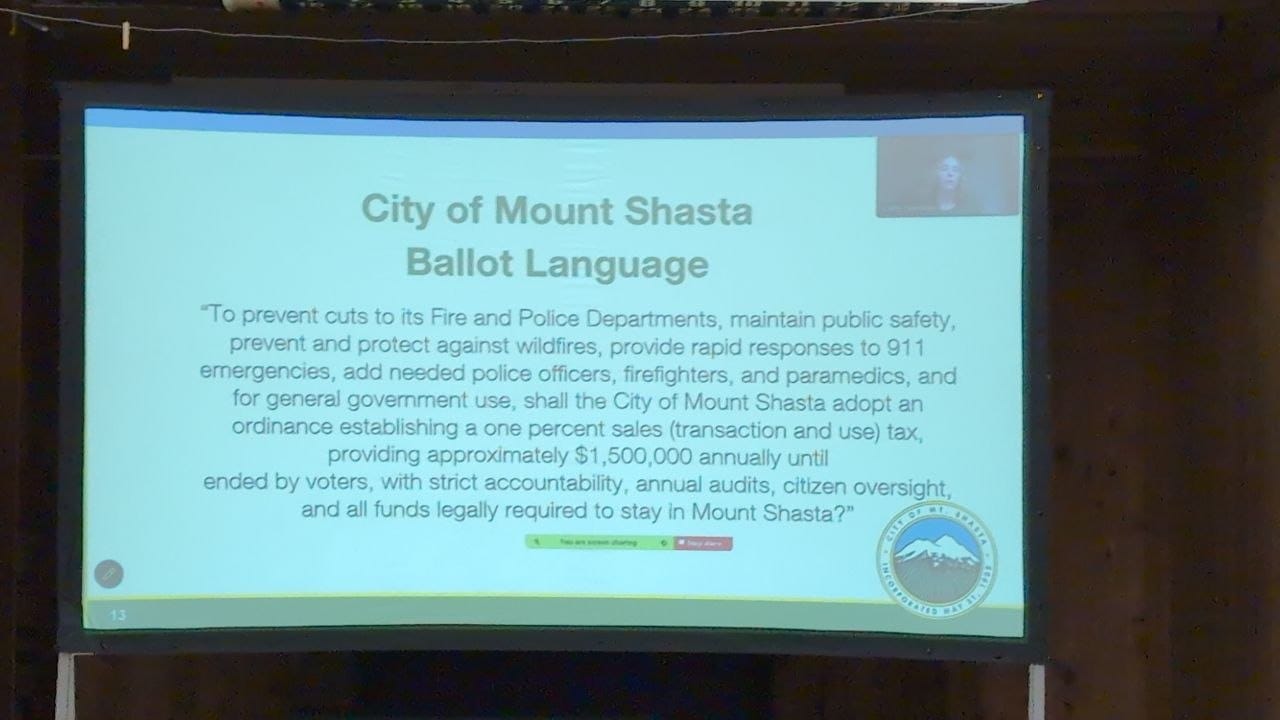
This presentation was shared at the Special Measure H Town Hall on October 13, 2026.
With that distinction understood, Gibson's stories offer a revealing look at the challenges the city is already facing.
Someone Has to Answer the Phone
Mount Shasta's Police Department costs approximately $1.8 million annually, according to Gibson, a figure that may surprise residents accustomed to thinking of their hometown as a quiet, relatively peaceful place. But a police department cannot simply close at five o'clock, or take weekends off because nothing particularly alarming happened the day before.
It must be ready all the time.
"When you call 911*, you're talking to somebody here," Gibson told the audience. His leadership and department's efficiency lead the county.
*In an interesting synchronicity, author's recording of Chief Gibson's presentation at last night's Town Hall lasted nine minutes and eleven seconds..911!
That means Mount Shasta maintains local emergency dispatch services, rather than relying entirely on a distant dispatch center. It also means keeping an officer available in town even when other officers are assisting with emergencies elsewhere in Siskiyou County.
Local matters. A dispatcher who knows Mount Shasta, its streets, its neighborhoods and the peculiarities of living beneath a mountain can bring familiarity to an emergency that might otherwise be handled by someone miles away. But maintaining that service requires people working around the clock, including nights, weekends and holidays.
Gibson said the department has already eliminated one full-time position and one part-time, on-call dispatch position to reduce expenses. On paper, eliminating positions saves money. In practice, it can also mean paying other employees overtime to cover the same essential shifts, particularly when someone is sick, takes vacation or needs time off after a difficult incident.
And difficult incidents are part of the job.
Gibson spoke about recent responses involving a suicidal juvenile, and the search for a missing elderly resident. I wrote about Dortha Evans in this Observer article:
 Anastasia Sprout

These are the calls that rarely make headlines but can stay with the people who answer them long after their shifts end--and the community who is impacted by how the emergency response is handled. Officers and dispatchers are expected to remain calm, think clearly and help others through some of the worst moments of their lives. Then, often, they return to work and do it again.
Gibson emphasized the importance of giving employees time away from that stress. But with fewer people available, every absence must be covered by somebody else, often at overtime rates. Cutting a position may save one salary while creating new costs and putting additional strain on the employees who remain.
The department has also reduced its training budget. Gibson expressed confidence in his current officers, but police work doesn't stand still. Laws change, equipment changes, and the skills needed to respond safely to dangerous situations require continued practice. Training is one of the expenses that can be postponed when money is tight, although the consequences of postponing it may not become apparent until something goes wrong.
A $2.9 Million Grant—and the Catch
Mount Shasta has been fortunate to receive substantial outside funding for law enforcement. Through California's Proposition 64 Public Health and Safety Grant Program, the Police Department was awarded $2,907,211 for a five-year project running from May 1, 2023, through April 30, 2028. Police Chief Robert Gibson serves as the grant's Project Director, overseeing a program that brings significant state funding into our small community.
The California Board of State and Community Corrections describes the project as an expansion of Mount Shasta's Community Enhancement Program, supporting youth prevention activities, community services and a full-time officer assigned to a regional task force addressing illegal marijuana cultivation.
Gibson described the grant-supported work as including a school-based officer, a countywide drug task force officer and a code enforcement officer. He said the funding covers salaries, benefits, vehicles, equipment and other expenses, representing more than $600,000 annually in support for local services.
That's a considerable amount of money for a small city. But the grant comes with conditions, including restrictions against supplanting, which generally means using grant money to replace expenditures that the agency would otherwise be responsible for providing.
Here is the problem Gibson described: If the city cuts regular police staffing too deeply, he may have to bring the drug task force officer back to Mount Shasta to cover local patrol duties. But changing a grant-funded officer's assignment could interfere with the conditions under which that funding was awarded.
In other words, the city could find itself in the peculiar position of losing outside money because it no longer has enough of its own money to maintain the staffing arrangements that make the grant possible.
The current grant runs through April 2028. Gibson said the department intends to pursue future funding, but no one can guarantee another award. Meanwhile, the city must maintain enough regular police coverage to protect Mount Shasta while its grant-funded personnel perform their assigned work.
Marijuana Raids Are Turning Up More Than Marijuana
Gibson also described what the countywide drug task force has been finding during its investigations. Recalling figures from the April through June reporting period, he reported enforcement activity at approximately 60 locations, with seizures totaling about 28,000 illegal marijuana plants, more than 2,700 pounds of processed marijuana, 16 firearms and over $10,000 in cash.
He also reported approximately 61 pounds of cocaine.
That last figure deserves attention. Although the task force's work includes illegal cannabis cultivation, the investigations Gibson described are not necessarily limited to marijuana. He said officers are encountering other controlled substances, and he referred to fentanyl overdoses in Mount Shasta as evidence of the broader drug problems affecting the community.
A drug task force officer assigned to regional investigations may be working far outside city limits, but the chief's concern is that the illegal drug trade does not respect those boundaries. Drugs discovered in one part of the county can affect families in another, including Mount Shasta.
The problem returns to staffing. If Gibson cannot maintain enough officers to cover local calls, he said he may have to withdraw his officer from the regional assignment, regardless of how valuable that work may be.
Read more about illegal drugs, particularly cannabis in Siskiyou County, here:
 Anastasia Sprout

The Emergencies Nobody Can Budget For
Police Chief Robert Gibson described a felony evasion incident that cost the department a patrol vehicle, along with another vehicle-related incident on the day of his presentation. Replacing a fully equipped police car is expensive, especially when the loss comes without warning. Mount Shasta receives approximately $150,000 to $200,000 annually through a state law enforcement grant known as COPS, which has helped pay for vehicles, protective vests, radios, training and personnel. But as the city's finances have tightened, Gibson said more of that money has gone toward salaries, leaving less for essential equipment.
Then there are emergencies that require unexpected staffing and overtime, such as the recent search for missing resident Dortha Evans, or a hostage situation in the Gumboot area that required assistance from Mount Shasta officers. Nobody can predict such events when preparing an annual budget, but somebody must respond, and the expenses add up quickly. Gibson emphasized the importance of maintaining financial reserves so the city can handle emergencies without sacrificing other essential services.
Why Voters Are Seeing Another Sales Tax Measure
In November 2024, Mount Shasta voters considered Measure B, a one-percent sales tax dedicated to police and fire protection. As a special tax, it required approval by two-thirds of voters and failed to reach that threshold. Measure H, on the November 3, 2026 ballot, also proposes a one-percent increase, but it is a general tax requiring only a simple majority. Unlike Measure B, its revenue would not be legally restricted to public safety.
The city has described annual audits and citizen oversight as safeguards, but decisions about spending would ultimately rest with the City Council. Residents who want to be sure the additional revenue directed toward police and fire protection will need to follow the city's budgets.
What Happens if Measure H Fails?
Gibson did not identify specific positions or services that would be eliminated if Measure H fails. Instead, he described the financial pressures already affecting the Police Department: eliminated positions, increased overtime costs, reduced training and the possibility of withdrawing an officer from countywide drug investigations to maintain local patrol coverage. For fire protection, he recalled the consequences of an engine arriving without enough firefighters immediately available to fight a fire.
Failure of Measure H would not automatically eliminate emergency dispatch, terminate existing grants or close the Fire Department. Those decisions would depend on available revenue and future City Council budgets. Likewise, passage would provide additional general operating funds without guaranteeing that every dollar would go to public safety.
Behind the budget figures are real people and real emergencies: an officer comforting a frightened child, a dispatcher answering a desperate call, firefighters racing to contain a blaze before it spreads. These are the experiences Gibson brought to the town hall, reminding residents that decisions about city finances ultimately affect what happens when someone calls for help.
Comments ()